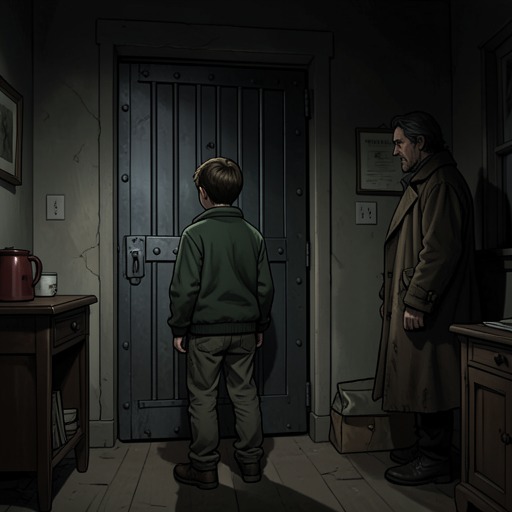
“We need never be ashamed of our tears”
Great Expectations“We need never be ashamed of our tears” is Pip’s reflection on grief as a force that clears the heart and renews moral feeling. Spoken as he leaves home, the thought becomes a recurring ethical measure: tears accompany his recognition of ingratitude, expose the costs of emotional hardness, and open a path toward forgiveness and care.
The Farewell That Gives the Phrase Its Meaning
Pip reaches this conviction after leaving Joe, his sister, and Biddy. He has kissed them, walked away briskly, and tried to treat the departure as easy; at the village finger-post, however, the rising mists and the thought of how innocent and small he had been there overcome him. He breaks into tears and says goodbye to his dear friend. The movement from performed composure to grief makes the episode more than a sad parting: Pip recognizes that his attachment to home and Joe is deeper than his earlier conduct has shown.
The reflection that follows gives those tears an ethical meaning. Pip figures them as rain falling on the blinding dust that lies over hard hearts. After crying, he feels more sorry, more aware of his own ingratitude, and gentler. He also realizes that if he had cried before leaving, Joe would have accompanied him. The insight therefore joins feeling to consequence: grief reveals the affection Pip had failed to express, while the lost chance to travel with Joe makes that recognition painful.
Feeling Suppressed and Misread
Later, Pip’s difficulty with emotional generosity appears in his impatience with Joe during Joe’s visit to London. He notices Joe’s awkwardness in his holiday clothes, his uncertain manners at the table, and his effort to manage his hat, but does not initially understand that his own discomfort has helped make Joe uneasy. Pip eventually identifies the reversal: he has neither the good sense nor the good feeling to see that if he had been easier with Joe, Joe would have been easier with him. Joe answers this failure with kindness, heaping coals of fire on Pip’s head rather than reproaching him. Against that scene, the earlier praise of tears reads as a recognition Pip has not yet learned to live by: tenderness must overcome the pride and impatience that keep affection from being shown.
A more forceful contrast comes when Miss Havisham urges Pip to love Estella whether she favours or wounds him, even if she tears his heart to pieces. Her repeated command makes suffering sound like the price of a love she has deliberately cultivated. Estella later rejects the premise that her coldness is simply her own choice, telling Miss Havisham to take both the praise and blame for what she has made of her. These encounters distinguish pain that is acknowledged from pain used to control others. The phrase about tears affirms the possibility that suffering may soften the heart; it does not endorse the deliberate infliction of heartbreak.
Remorse and the Possibility of Forgiveness
The phrase’s moral logic returns when Pip and Miss Havisham confront the harm in their shared past. Miss Havisham asks Pip to write “I forgive her” beneath her name, even if he can do so only after her broken heart has turned to dust. Pip answers that he can forgive her already, acknowledging his own mistakes and saying that he needs forgiveness and direction too much to remain bitter. Her response is physical as well as verbal: she turns to him, drops to her knees, grasps his hand, and weeps. Pip has never seen her shed a tear before. Her remorse alters the scene’s balance, and his compassionate silence allows her grief to be witnessed rather than answered with condemnation.
Pip’s recollection of that moment expands the phrase beyond his own departure from home. Tears are no longer only the sign by which he discovers his own ingratitude; they also accompany another person’s recognition of harm and a plea for forgiveness. The movement is reciprocal: Pip offers forgiveness, while Miss Havisham’s tears make visible a sorrow that had previously been withheld. The scene gives emotional expression a reparative possibility without erasing what has been done.
A Recurring Measure of Affection
Near the end of Magwitch’s life, the same ethical pattern appears without tears being named. Magwitch thanks Pip for never having deserted him, and Pip silently presses his hand, unable to forget that he once intended to do so. Magwitch says that Pip has been more comfortable beside him under a dark cloud than when the sun shone. The contrast recalls the departure from Joe: Pip’s feelings become most trustworthy when hardship strips away the status and ease that once distracted him from those he loved. Here, affection is established through steadfast presence rather than a declaration.
Taken together, these moments make the phrase a compact account of Pip’s moral education. At the village finger-post, tears uncover a neglected bond; in London, their absence corresponds to pride and unkindness; in the reconciliation with Miss Havisham, witnessed grief helps make forgiveness possible; and beside Magwitch, care is shown through remaining present. The repeated contrast is not between strength and weakness, but between feeling that is suppressed or manipulated and feeling that can acknowledge responsibility and renew human connection.